

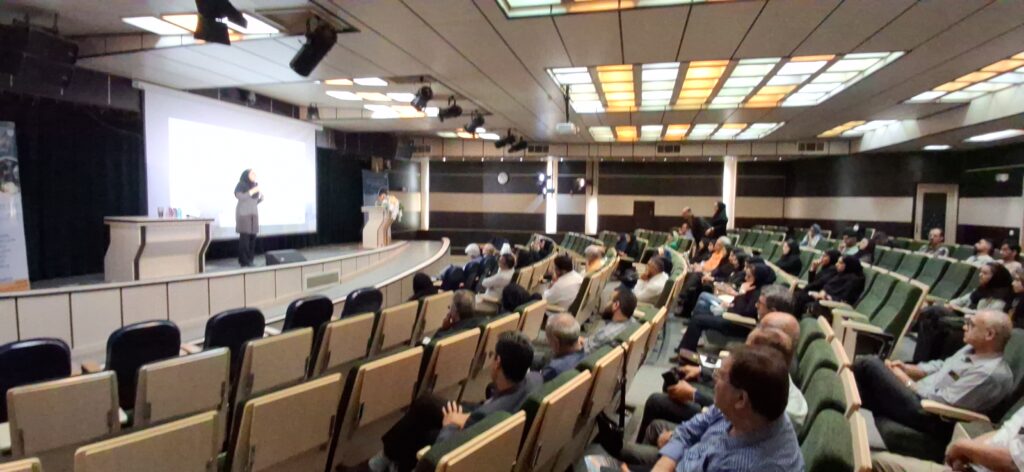
In collaboration with the University of Isfahan and the Cognitive Science Laboratory of the University of Isfahan
Date: July 24, 2025
Lecturers:
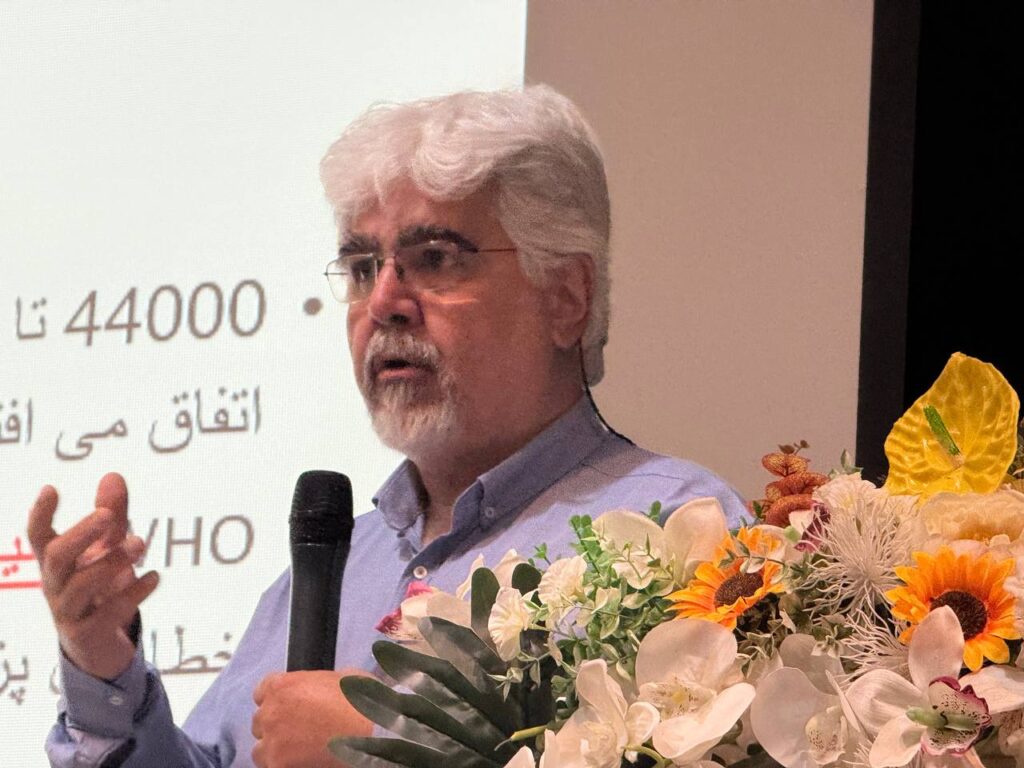
Seyed Ahmad Mirhosseini MD, Neurosurgeon
Alireza Faridmoayer MD, Neurosurgeon
Dr. Lida Shafaghi, PhD in Neuroscience
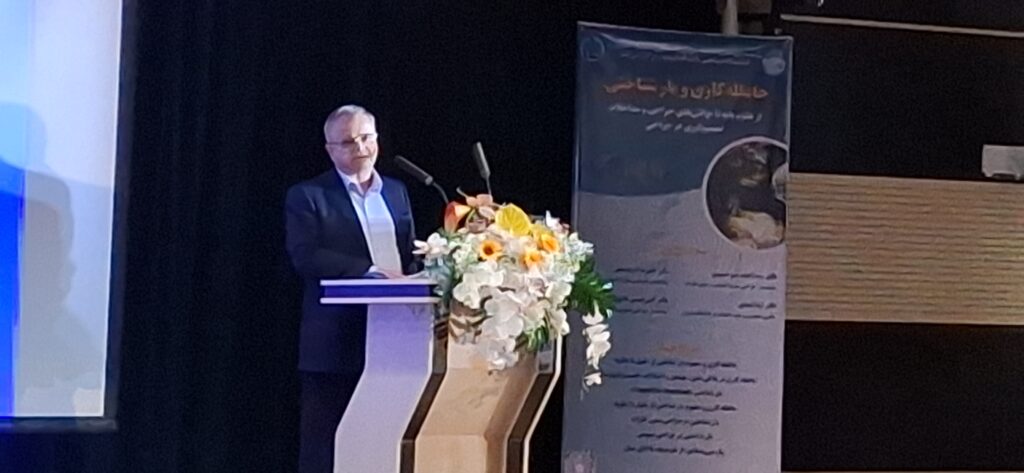
The present session, entitled “Working Memory and Cognitive Load: From Basic Science to Surgical Challenges”, was held under the scientific chairmanship of Dr. Alireza Faridmoayer, with the aim of providing a multidimensional examination of one of the most fundamental cognitive mechanisms in humans. Designed as an interactive, in-person educational conference, the program featured specialized presentations, case analyses, and direct dialogues between neuroscientists and surgeons. The event began with discussions led by experts in cognitive neuroscience and surgery, covering theoretical foundations and neural structures related to working memory, and extended to the exploration of its practical applications in high-pressure environments such as the operating room. By focusing on the connection between scientific theories and clinical applications, the session created an opportunity for knowledge exchange across disciplines and laid the groundwork for developing cognitive interventions and optimizing mental performance in complex and critical situations.
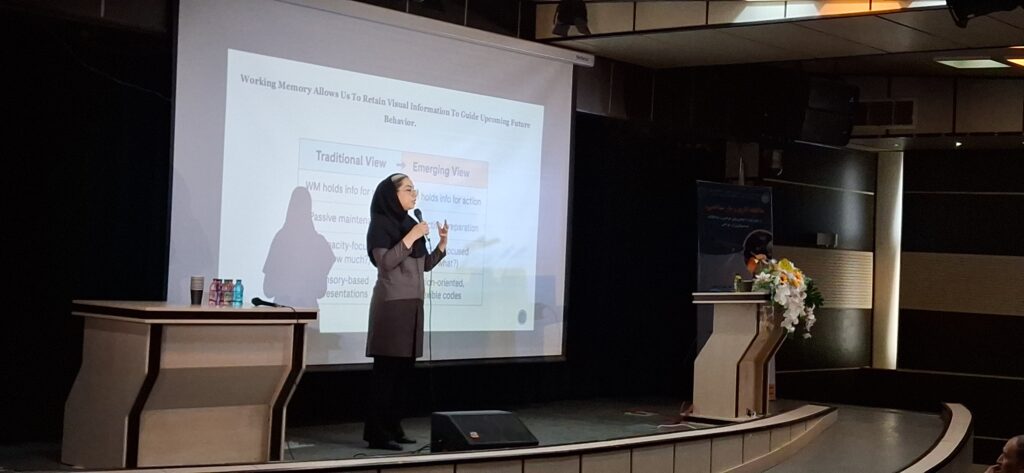
Working memory serves as a bridge between sensory perception and complex cognitive operations, a dynamic and living system that enables the temporary storage and manipulation of information within the brain. This core mechanism underlies abstract thought, reasoning, problem-solving, and learning. Unlike short-term memory, which functions as a passive reservoir, working memory is an active cognitive workspace where mental operations unfold in real time.
Among various theoretical models, the multi-component framework proposed by Baddeley and Hitch holds a prominent position. This model delineates working memory into components including the phonological loop, visuospatial sketchpad, episodic buffer, and a central executive. Clinical studies, particularly those focusing on individuals with Alzheimer’s disease, have demonstrated that damage to the central executive system substantially impairs the ability to perform tasks simultaneously, revealing its pivotal role in managing attentional and cognitive resources.
From a neurophysiological standpoint, working memory is not realized in stillness but in the continuous activity of neurons. During delay-based cognitive tasks, neurons in the prefrontal cortex (PFC) maintain high-frequency firing rates, serving as neural beacons that represent the active retention of internal information. This persistent firing is not merely epiphenomenal; rather, it plays a functional and indispensable role in task performance, as evidenced by performance decline when such activity is experimentally disrupted.
In parallel, the modern activity-silent working memory theory posits that memory can also be stored without ongoing neural activity. In such states, the brain preserves information in latent synaptic configurations, ready to be reactivated with remarkable efficiency when needed. This energy-conserving mechanism, termed the “activity-silent state”, challenges classical views of memory storage and expands our understanding of short-term retention as a hybrid of active and silent modes. Furthermore, the role of neuromodulators such as dopamine in regulating these processes is both essential and nuanced. Dopamine does not merely enhance memory; it functions as a precision regulator, attentional gatekeeper, and confidence encoder. Its effects are governed by a nonlinear, inverted-U relationship, where both deficiency and excess can impair working memory performance. Dopaminergic interactions with frontoparietal and frontostriatal circuits modulate moment-to-moment changes in capacity, prioritization, and representational fidelity within the working memory system.
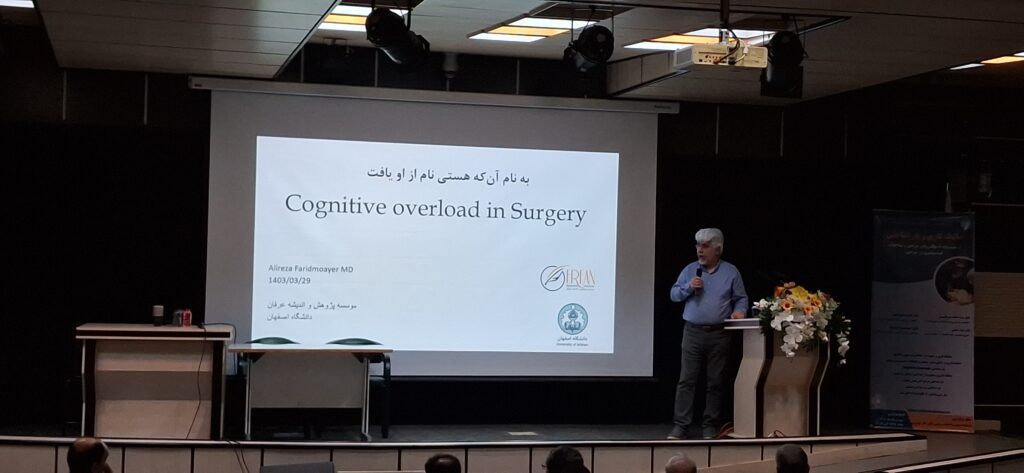
The concept of cognitive load, referring to the mental effort involved in information processing, is typically divided into three categories: intrinsic load (related to content complexity), extraneous load (caused by poor instructional design or environmental noise), and germane load (effort invested in meaningful learning and schema formation). Intelligent instructional strategies aim to reduce extraneous load while fostering germane load to facilitate deep, efficient learning.
Contrary to earlier assumptions, working memory capacity is not a static trait. Emerging evidence suggests that cognitive training (e.g., N-back tasks), mindfulness meditation, transcranial magnetic stimulation (TMS), 40 Hz binaural beats, as well as physical exercise and nutritional optimization, can significantly enhance working memory capacity and efficiency.
Ultimately, working memory must be understood as a multidimensional and integrative neural system—one shaped by the convergence of cortical oscillations, neurochemical modulators like dopamine, cognitive schema, and attentional control. It is this intricate interplay that enables humans to represent, manipulate, and act upon internal models of the world with remarkable flexibility and precision.

Those interested may access the summaries of the discussions and presentations delivered at the conference through the following link.
Part I of the Lecture: Working Memory and the Concept of Cognitive Load
Part II of the Lecture: Cognitive Load in Spinal Surgeries